AI Coding Tutor: How AI Is Changing the Way You Learn Programming
 By Ayan Sarkar
12 min read
Learning to code has traditionally involved a combination of textbooks, online courses, documentation, coding exercises, and guidance from instructors or experienced developers. While these resources remain valuable, artificial intelligence is introducing a new way to learn programming: the AI coding tutor.
An AI coding tutor can provide interactive explanations, analyze code, identify errors, answer programming questions, and adapt learning support based on a learner’s needs. Instead of following a fixed learning path, students can interact with an AI system while they learn, practice, debug, and build projects.
This shift is part of a broader transformation in personalized education, where technologies such as Large Language Models (LLMs) and Natural Language Processing (NLP) are being used to make learning more interactive and responsive.
What Is an AI Coding Tutor?
An AI coding tutor is an artificial intelligence-powered learning system designed to help users understand programming concepts, write code, troubleshoot errors, and practice coding.
Unlike a traditional programming course that generally follows a predefined sequence of lessons, an AI tutor can respond to a learner’s questions in real time. For example, a beginner learning Python might ask:
“Why am I getting an indentation error?”
The AI tutor can analyze the code, explain the cause of the error, and provide guidance on how to correct it.
More advanced systems can go beyond answering questions. They can assess a learner’s responses, identify knowledge gaps, recommend practice exercises, explain programming concepts at different levels, and provide feedback throughout the learning process.
How Does an AI Coding Tutor Work?
Most modern AI coding tutors rely on a combination of artificial intelligence technologies, including:
- Large Language Models (LLMs): Help understand programming questions and generate explanations or code-related responses.
- Natural Language Processing (NLP): Enables the system to understand questions written in natural language.
- Code analysis: Helps identify syntax errors, logical problems, and potential improvements.
- Adaptive learning: Uses information about a learner’s progress to provide more relevant exercises and explanations.
- Conversational AI: Allows learners to interact with the system through natural dialogue.
Together, these technologies create a learning environment where programming concepts can be explored interactively rather than simply consumed as static lessons.
Why Is AI Changing Programming Education?
Programming requires more than memorizing syntax. Learners need to understand how programming concepts work, apply them to problems, identify mistakes, and develop logical thinking.
Traditional learning resources can explain these concepts, but they may not always provide immediate, personalized feedback. An AI coding tutor can potentially fill this gap by making the learning process more interactive.
For example, when learning loops, a student may understand the theoretical explanation but struggle to apply it in a program. Instead of moving directly to the next lesson, the learner can ask questions, experiment with code, and receive explanations based on the specific problem they are facing.
This creates a more iterative learning process:
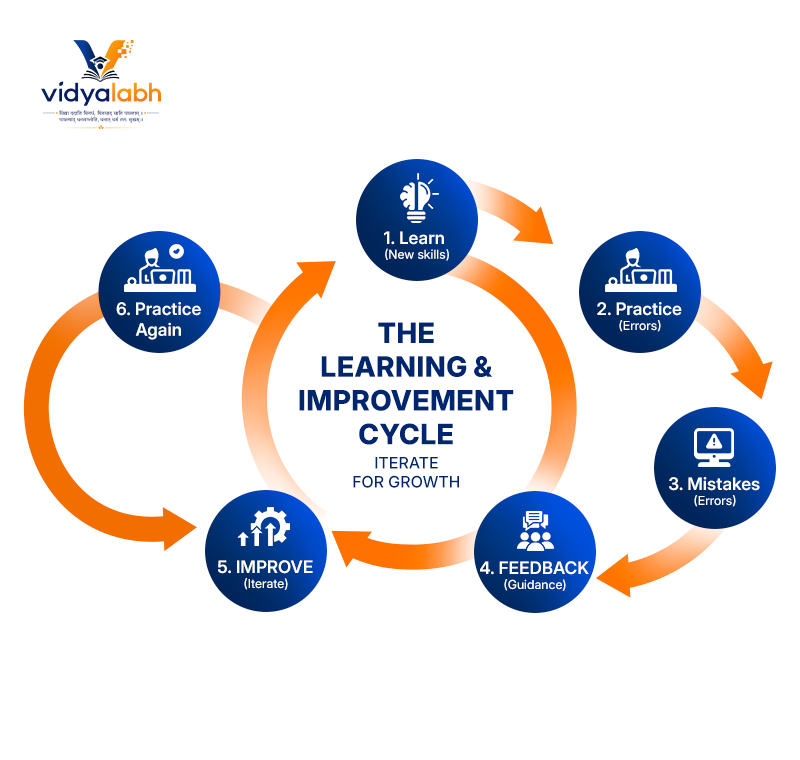
The ability to repeat this cycle quickly is one of the major advantages of AI-assisted programming education.
7 Ways an AI Coding Tutor Can Improve Programming Learning
1. Provides Personalized Explanations
Not every learner understands programming concepts in the same way.
One student may understand a technical explanation immediately, while another may need a simpler example or a practical analogy.
An AI coding tutor can adjust explanations based on the learner’s questions. A complex concept such as object-oriented programming, recursion, or APIs can be explained at different levels of complexity.
For beginners, the explanation can focus on fundamentals. More experienced learners can receive deeper technical explanations and implementation examples.
2. Offers Immediate Feedback
Feedback is an important part of programming education.
When a learner writes code incorrectly, waiting for an instructor or community response can interrupt the learning process. An AI tutor can provide immediate feedback and help explain why a particular approach may not work.
For example, instead of simply stating that a program contains an error, an AI system can explain:
- Where the problem occurs
- Why the error happened
- What programming concept is involved
- How the code could be corrected
- How to avoid a similar mistake in the future
This turns debugging into a learning opportunity.
3. Makes Debugging More Educational
Debugging is one of the most important skills developers develop, but beginners often find it difficult.
An AI coding tutor can analyze a learner’s code and help identify potential problems. More importantly, it can explain the reasoning behind the issue.
For example, if a Python program produces a TypeError, the learner can ask why the error occurred instead of simply replacing the problematic line.
This encourages learners to understand the underlying programming principle rather than depending entirely on automated corrections.
4. Enables Conversational Learning
Traditional programming courses often require learners to search documentation, forums, or tutorials whenever they have a question.
Conversational AI changes this interaction.
Learners can ask questions naturally:
- “Explain arrays like I am a beginner.”
- “Why does this function return None?”
- “What is the difference between a list and a tuple?”
- “Give me a practice problem on loops.”
- “Can you explain this error without giving me the complete solution?”
This creates a more flexible learning experience because the learner controls the direction and depth of the conversation.
5. Supports Learning Through Practice
Understanding programming requires hands-on practice.
An AI tutor can generate programming exercises based on a learner’s current skill level. A beginner might receive simple syntax exercises, while an intermediate learner could work on data structures, APIs, algorithms, or application development.
Practice can also become progressively more challenging.
For example:
Beginner: Write a program that checks whether a number is even or odd.
Intermediate: Create a function that processes a list of numbers and returns specific results.
Advanced: Design an efficient algorithm for a larger dataset and analyze its complexity.
This progression can help learners develop programming skills gradually.
6. Helps Identify Knowledge Gaps
One of the challenges of self-directed learning is knowing what you do not understand.
A learner may complete several lessons but still have weaknesses in fundamental concepts.
AI-based learning systems can analyze interactions, answers, coding exercises, and mistakes to identify areas that may require additional practice.
For example, if a learner repeatedly struggles with conditional statements, the system could recommend additional exercises before introducing more advanced concepts.
This creates a more personalized learning path.
7. Makes Learning More Accessible
Programming resources are available across the internet, but the volume of information can sometimes become overwhelming.
An AI coding tutor can act as an interactive starting point by helping learners understand what they should learn next and simplifying complex information.
This can be particularly useful for beginners who may not yet know how to navigate programming documentation, developer communities, or technical resources effectively.
AI Coding Tutor vs. Traditional Programming Learning
AI does not necessarily replace traditional programming education. Instead, it can complement existing learning methods.
Learning Method |
Traditional Approach |
AI-Assisted Approach |
| Lessons | Predefined content | Potentially adaptive content |
| Questions | Ask an instructor or search online | Ask the AI directly |
| Feedback | May take time | Usually immediate |
| Practice | Predefined exercises | Potentially personalized exercises |
| Debugging | Self-research or instructor help | Interactive code analysis |
| Learning pace | Often structured | Can be adjusted to the learner |
| Revision | Repeat existing resources | Generate explanations and practice based on weaknesses |
The Role of Large Language Models in AI Coding Tutors
Large Language Models (LLMs) are an important component of many modern AI learning systems.
LLMs are trained on large amounts of textual and programming-related information. Their ability to understand natural-language instructions and generate responses makes them suitable for conversational programming assistance.
For example, an LLM can interpret a request such as:
“Explain recursion using a simple Python example.”
It can then generate an explanation and example tailored to the learner’s request.
However, LLMs are not infallible. They can sometimes generate incorrect code, misunderstand a programming problem, or provide explanations that sound convincing but contain errors.
Therefore, learners should treat AI-generated programming assistance as a learning aid rather than an unquestionable authority.
The Role of NLP in AI-Powered Programming Education
Natural Language Processing (NLP) enables computers to process and understand human language.
In an AI coding tutor, NLP helps interpret questions such as:
“Why isn’t my loop stopping?”
The system needs to understand the learner’s intent, identify the relevant programming concept, and generate an appropriate response.
This natural-language interaction makes programming education more accessible because learners do not always need to use precise technical terminology to ask for help.
Over time, conversational interfaces can make technical education feel less like searching a database and more like interacting with an intelligent learning assistant.
Can an AI Coding Tutor Replace a Human Programming Teacher?
An AI coding tutor can provide many forms of support, but it should not be viewed as a complete replacement for human educators.
Human teachers can provide context, motivation, mentorship, project guidance, and nuanced feedback that AI systems may not consistently provide.
AI is particularly useful for tasks such as:
- Explaining programming concepts
- Generating practice questions
- Providing immediate feedback
- Assisting with debugging
- Answering repetitive questions
- Supporting self-paced practice
Human instructors remain valuable for:
- Mentorship
- Complex project guidance
- Career advice
- Assessing broader learning outcomes
- Understanding individual circumstances
- Developing collaboration and communication skills
A combination of AI assistance and human guidance can therefore provide a more comprehensive learning experience.
How to Use an AI Coding Tutor Effectively
Using AI effectively requires more than asking it to write code.
Ask for Explanations, Not Just Answers
Instead of asking:
“Give me the code.”
Try:
“Explain how I should approach this problem and give me hints without providing the complete solution.”
This encourages active problem-solving.
Use AI for Debugging
When you encounter an error, provide the relevant code and error message and ask the AI to explain the cause.
The objective should be to understand the problem rather than simply copy a corrected version.
Ask for Progressive Challenges
Once you understand a concept, ask for increasingly difficult exercises.
This helps transform passive understanding into practical programming ability.
Verify AI-Generated Code
AI-generated code should be tested and reviewed.
Check:
- Whether the code produces the expected result
- Whether the logic is correct
- Whether the solution is secure
- Whether the approach is efficient
- Whether the code follows appropriate programming practices
This habit is important because AI systems can make mistakes.
What Are the Limitations of AI Coding Tutors?
Despite their potential, AI coding tutors have limitations.
Incorrect or Misleading Answers
AI models can occasionally produce inaccurate explanations or code. A learner who accepts every response without verification may develop incorrect programming habits.
Overdependence on AI
If learners use AI to solve every programming problem, they may reduce opportunities to develop independent problem-solving skills.
The goal should be to use AI as a learning assistant, not as a replacement for thinking.
Limited Understanding of Context
An AI system may not fully understand the learner’s broader goals, educational background, or real-world development environment.
Security and Privacy Considerations
Learners and developers should be careful when sharing source code or sensitive information with AI systems. Proprietary code, credentials, API keys, personal information, and confidential project details should not be shared unnecessarily.
The Future of AI-Assisted Programming Education
The development of AI is likely to make programming education increasingly interactive and personalized.
Future AI coding tutors may become better at understanding individual learning patterns, evaluating programming approaches, creating personalized curricula, and providing context-aware feedback.
Instead of simply recommending a course, an AI learning system could potentially determine:
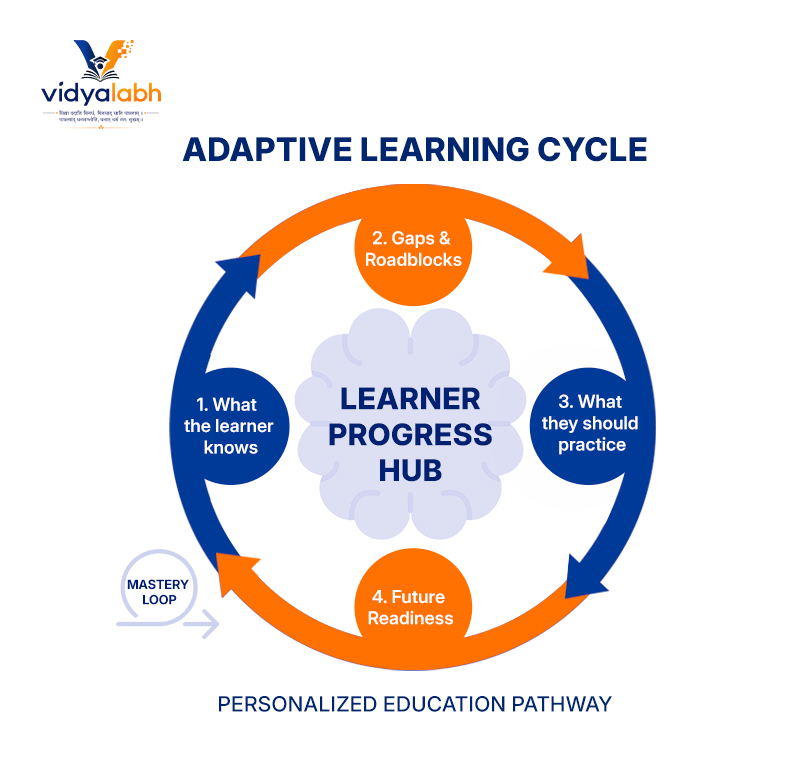
This represents a shift from standardized digital learning toward more adaptive education.
The broader impact may extend beyond beginners. Experienced developers can also use AI-based learning systems to explore unfamiliar programming languages, frameworks, tools, and technical concepts.
Frequently Asked Questions About AI Coding Tutors
What is an AI coding tutor?
An AI coding tutor is an artificial intelligence-powered learning system that helps people learn programming through explanations, coding exercises, debugging assistance, feedback, and interactive conversations.
Is an AI coding tutor good for beginners?
Yes. An AI coding tutor can be particularly useful for beginners because it can explain programming concepts in simple language, answer questions, provide practice exercises, and offer immediate feedback.
Can AI teach you how to code?
AI can help teach programming concepts, provide examples, generate exercises, explain errors, and guide learners through problems. However, effective programming education still requires independent practice, experimentation, and verification of AI-generated information.
Which programming languages can an AI coding tutor teach?
Depending on the system, an AI coding tutor can support languages such as Python, JavaScript, Java, C++, C#, SQL, HTML, and CSS, among others. The available capabilities vary between AI platforms.
Can an AI coding tutor help with debugging?
Yes. AI coding tutors can analyze code and error messages and explain potential causes of programming errors. However, developers should test suggested solutions rather than accepting them without verification.
Will AI replace coding teachers?
AI is unlikely to eliminate the need for human educators entirely. Instead, AI can complement teachers by providing personalized practice, instant explanations, and additional support while educators focus on mentorship, context, and higher-level learning.
Conclusion
The AI coding tutor is changing programming education by making learning more interactive, responsive, and potentially personalized. Technologies such as LLMs and NLP allow learners to communicate with AI using natural language, receive explanations, practice coding, and troubleshoot problems in real time.
However, the value of AI in programming education depends on how it is used. Learners should not rely on AI simply to produce working code. They should use it to understand programming concepts, investigate errors, practice problem-solving, and strengthen their technical knowledge.
As artificial intelligence continues to evolve, AI-assisted programming education is likely to become an increasingly important part of how people learn to code. The strongest learning approach will not necessarily be AI instead of traditional education, but rather AI combined with structured learning, hands-on practice, reliable resources, and human guidance.